
When my husband and I started talking seriously about where to take our family the following summer, river cruising was not on our radar. It wasn’t that we hadn’t heard of it.
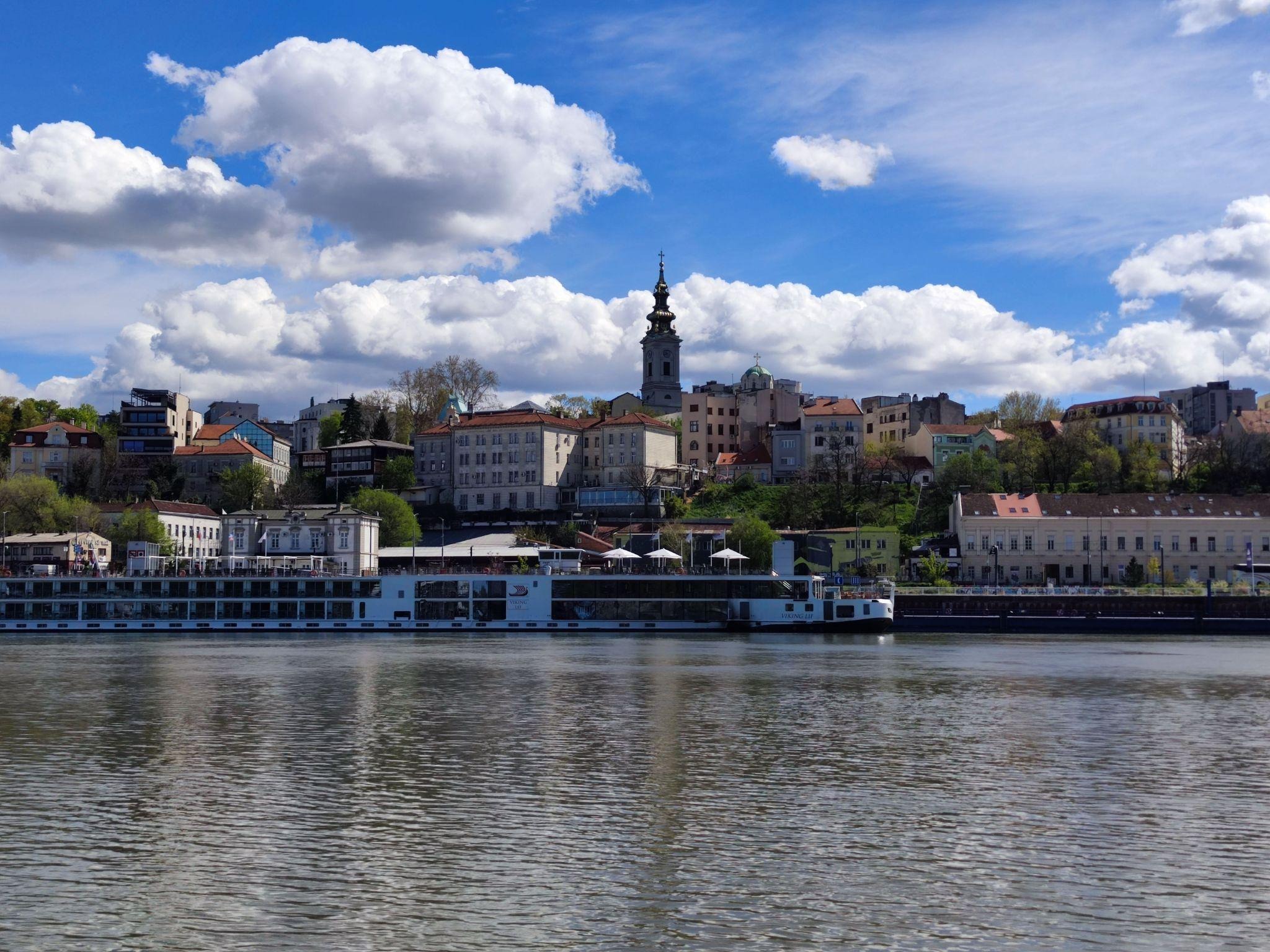
Photo by Boris Hamer: https://www.pexels.com/photo/danube-in-belgrade-16397544/
We had friends who raved about their Rhine itineraries, and I’d seen enough magazine spreads to know that the Danube was supposed to be spectacular. But those same magazine spreads seemed to feature only elegantly dressed retirees sipping wine in very quiet lounges.
The assumption, fair or not, was that this was a category built for people who no longer had children demanding screen time or complaining about being bored five minutes into a museum visit.
We were coming off a year of trying to make various vacation formats work for a family with kids aged eleven and fourteen. The resort model had started to feel stale. We’d spend a week at the same pool, the same beach, the same buffet, and come home relaxed but without much to talk about beyond the quality of the nachos. City hopping through Europe sounded more engaging, but the logistics made me tired just thinking about them.
Packing and unpacking every two days. Navigating foreign train stations with teenagers who suddenly couldn’t carry their own bags. Finding restaurants every night that would satisfy both a picky eater and parents who actually wanted to try the local food.
Then a colleague mentioned she’d just returned from a Danube cruise with her own teenagers, and something about the way she described it made me reconsider. The logistics simplicity of unpacking once and waking up in a new city every morning. The all-inclusive structure that removed the daily negotiation about what things cost.
The specific appeal of the Danube route itself, which threaded together Budapest, Vienna, Bratislava, and a string of smaller towns and landscapes we’d only seen in history textbooks.
We knew Vienna meant classical music and imperial architecture. We knew Budapest had thermal baths and a dramatic riverfront.
But we didn’t know what the Wachau Valley was, or why anyone would care about a monastery in Melk, or how a river trip through Central Europe could hold the attention of two teenagers who were more interested in their phones than in medieval anything. We booked it anyway, more out of exhaustion with the alternatives than genuine conviction. That hesitation turned out to be the last time we underestimated what the trip would become.
What the First Few Days Taught Us About River Travel with a Family
The ship felt different from the moment we stepped onboard. Not bigger and more impressive, but smaller and more manageable in a way that immediately made sense for a family.
The guest count was in the hundreds rather than thousands, which made the onboard environment feel more like a small hotel than a floating resort, and within a day we recognized faces at breakfast and in the hallways.
That sense of contained community mattered more than I expected. Our eleven-year-old, who usually clung to us in unfamiliar environments, started moving through the ship with confidence by day two.
What surprised us most in those early days was how the river format solved problems we hadn’t quite articulated about other kinds of family travel. The contained environment removed the logistical complexity of navigating foreign cities with kids who had different energy and interest levels.
When one of them was tired or overstimulated, the ship was right there, ten minutes away, with a quiet lounge or a familiar cabin to retreat to. When both of them wanted to keep exploring, we could. The shore excursion model meant we could calibrate how much history and how much wandering we took on in each port rather than being locked into a single plan for the whole day.
We were sailing with European cities, a Miami-based operator that had brought its modern hospitality approach and all-inclusive structure to European river itineraries in a way that felt distinctly different from what we’d expected river cruising to be.
The onboard rhythm gave our kids enough structure to feel secure and enough novelty to feel engaged. Mealtimes were predictable but not rigid. The cabins were compact but cleverly designed, with enough storage that we never felt like we were living out of suitcases.
The big revelation was how waking up in a new place each morning created a sense of daily adventure without the exhaustion of daily repacking and transit. Our fourteen-year-old, who had been the most skeptical about the whole idea, admitted on day three that this was better than he’d expected. Coming from him, that was high praise.
Budapest and What It Taught Us About Expectations
Budapest turned out to be a Danube showstopper, with thermal baths, glowing bridges, and architecture that blended Gothic, Baroque, and Art Nouveau, and it exceeded every expectation we’d walked in with.
We’d planned to visit one of the famous thermal baths as a family, something I wasn’t entirely sure would work with teenagers who generally avoided anything that felt too touristy. But the thermal bath culture in Budapest isn’t performative. It’s just what people do. Locals and visitors all sharing the same warm pools, the same centuries-old ritual. Both kids loved it. We spent two hours there, which for our family is an eternity in any single location.
The ruin bars of the Jewish Quarter became an unexpected highlight, though for different reasons depending on who you asked. The teenagers loved the eclectic, slightly chaotic aesthetic of repurposed buildings filled with mismatched furniture and art installations.
My husband and I appreciated the history woven into the neighborhood and the fact that the bars themselves had become cultural landmarks. Family travel experiences create different touchpoints for different ages, and Budapest delivered that in ways we didn’t anticipate.
River cruises enable families to spend real quality time together while traveling, with activities designed for everyone to enjoy both on land and on the ship. The evening we spent watching the illuminated Parliament building from the ship’s deck became one of those rare moments where everyone was equally present, equally impressed, and equally quiet.
No one reached for a phone. No one asked when we were leaving. It was just a shared experience that worked on its own terms.
Vienna and the Work of Appreciating What Isn’t Immediately Obvious
Vienna required more effort. Not because it wasn’t beautiful or interesting, but because its appeal is more subtle, more layered, more dependent on slowing down and paying attention.
The city unfolds in layers, from imperial palaces and coffeehouse conversations to the echo of classical music around every corner, and we had to actively resist the urge to treat it as a checklist of famous sites.
The Naschmarkt became the experience that unlocked Vienna for us. It’s a sprawling open-air market with food stalls representing dozens of cuisines, produce vendors, spice shops, and enough visual chaos to keep even distracted teenagers engaged. We spent a morning there just tasting things, buying things, watching people.
Our eleven-year-old, who is our pickiest eater, discovered a new favorite pastry. Our fourteen-year-old struck up a conversation with a vendor about hot sauces. It wasn’t the imperial grandeur Vienna is famous for, but it was the most genuinely enjoyable thing we did in the city because it let us move at our own pace and follow our own curiosity.
The more formal parts of Vienna, the palaces and concert halls and art museums, became more interesting once we stopped treating them as obligations and started treating them as living parts of a city people actually inhabited. The specific way the city’s formality became intriguing rather than alienating happened when we gave ourselves permission to wander rather than march through an itinerary.
Research shows that both parents’ well-being and children’s skills increase through family tourism experiences, particularly when the experience is memorable, and Vienna ended up being memorable precisely because we let it reveal itself slowly.
The Wachau Valley and the Part Nobody Saw Coming
The Wachau Valley is pure poetry, a rolling landscape of terraced vineyards, hilltop ruins, and medieval towns, with scenery made richer by the flavors of local wine and apricot delicacies. Nobody in our family had particularly anticipated this part of the trip.
It wasn’t a famous city. There were no major landmarks we’d heard of. But it turned out to be the day many families on the ship, including ours, later described as their most beautiful.
The river narrows through the valley, and the landscape becomes something different from the urban experiences on either side of it. Vineyards climb hillsides in precise terraces. Small villages appear around bends, each one looking like it was designed to be photographed from the water. We docked in Dürnstein, a town small enough to walk end to end in fifteen minutes, and spent an hour just wandering its cobblestone streets and sampling apricot products at a family-run shop.
Melk Abbey, perched on a hill overlooking the river, was more impressive than any of us expected.
The Danube hosts 40% of all European river cruise departures, and standing in Melk, looking out over the valley, you understand why. It’s the kind of place that makes you stop talking and just look. Even our teenagers, who had developed a finely tuned resistance to being impressed by old buildings, admitted it was worth the climb.
What the Trip Did for Us as a Unit
One of the most unexpected outcomes of the Danube trip was how it changed the way we talked to each other. Not in any dramatic, life-altering way, but in small, persistent ways that lasted long after we got home.
Studies show that travel helps improve communication within relationships, strengthen lifelong family bonds, and increase well-being in both adults and children, and we saw that play out in real time.
Because there was no retreat to separate hotel rooms or separate activities, we ended up spending more sustained time together than we usually do even on vacation. Meals were communal. Shore excursions were communal. Evening time on deck was communal. That forced proximity could have felt claustrophobic, but the rhythm of the days, the variety of what we were seeing, and the fact that everyone had enough space when they needed it made it work.
The conversations that happened felt different. Less transactional, less focused on logistics or schedules, more genuinely curious about what each person was noticing and thinking. Our fourteen-year-old, who usually communicates in grunts and monosyllables at home, talked at length about the architecture in Budapest and how it compared to buildings he’d seen in games he played.
Our eleven-year-old asked questions about history and politics that we’d never heard from them before. Those weren’t scripted educational moments. They just emerged naturally because we were all looking at the same things and trying to make sense of them together.
Months after the trip, certain moments became family shorthand. Someone would mention “that apricot place” and everyone knew exactly what they meant. The thermal baths. The Parliament at night. The ridiculous castle in the Wachau Valley that looked like it was invented by a fantasy novelist. Those shared references created a common vocabulary that wouldn’t have existed otherwise.
The Practical Texture Nobody Warns You About
The cabins were smaller than hotel rooms, but they worked. The layout was clever enough that we never felt like we were on top of each other, and the floor-to-ceiling windows made the space feel more open than it actually was. Both kids slept well, which is not something we take for granted when traveling. The beds were comfortable, the storage was adequate, and the bathrooms, while compact, were functional.
Mealtimes surprised us with their flexibility and quality. There were multiple dining venues, which meant we could choose between a formal sit-down dinner and a more casual buffet depending on everyone’s mood and energy level.
The food was better than we expected. Not Michelin-star exceptional, but consistently good, with enough variety that even our picky eater found things they liked. The all-inclusive beverage structure meant nobody was tallying up costs or negotiating about whether someone could have a soda.
Downtime on the ship during longer river transits turned out to be valuable rather than boring. The kids read. We sat on deck and watched the landscape. There were no demands, no schedule, just time to do nothing, which is rarer than it should be. The onboard social dynamic worked better for teenagers than we expected.
They weren’t the only young people on the ship, and by mid-week they’d formed casual friendships with a few other families’ kids. Not deep bonds, but enough social interaction that they didn’t feel isolated.
What It Cost and What It Was Worth
We’d initially balked at the price. River cruises aren’t budget travel. But when we started breaking down what the all-inclusive model actually covered, the comparison with other family vacation options became more favorable.
Accommodations, all meals, beverages, Wi-Fi, daily shore excursions, and gratuities were included. When we added up what a week of hotels, restaurant meals, museum tickets, and transportation would have cost for a family of four trying to see the same cities independently, the gap narrowed considerably.
More valuable than the financial math was what the format delivered in terms of reduced decision fatigue. Every day on other trips involves dozens of small decisions about where to eat, what to do, how to get there, whether something is worth the cost.
On the river cruise, most of those decisions were already made. We could opt in or out of the planned shore excursions, but the baseline itinerary was set. That sounds restrictive, but in practice it was liberating. We had more mental energy to actually experience what we were seeing rather than constantly planning the next thing.
Why This Trip Earned Its Place in Our Family History
Engaging in travel activities outside the home setting allows parents and children to interact in a more relaxed manner, and studies suggest that children who spend more quality time with their parents tend to exhibit higher emotional security and self-esteem. The Danube trip earned its place in our family’s travel history not because it was the most luxurious thing we’d done, or the most adventurous, or the most exotic. It earned its place because it was the most coherent.
Everything worked together in a way that rarely happens. The format suited our family’s particular combination of ages and interests.
The destinations were varied enough to keep everyone engaged but connected enough geographically that the week felt like a single story rather than a collection of unrelated stops. The pace was neither rushed nor boring. The logistical simplicity removed friction that had undermined other trips.
When we ask the kids now what their favorite part was, they give different answers. Our fourteen-year-old says Budapest. Our eleven-year-old says the Wachau Valley. My husband says Vienna, though it took him a while to get there. I’d say the whole thing, which sounds like a cop-out but is genuinely true. The individual highlights mattered less than the cumulative experience of a week where everything felt intentional and nothing felt wasted.
A truly memorable vacation isn’t just pleasant. It’s transformative in small, lasting ways. It changes how you see a place, how you see your family, how you think about what travel can be. The Danube trip did that for us.
We went in with moderate expectations and came back understanding something about Europe, about river cruising, and about our own family that we hadn’t quite grasped before. That’s worth more than any single sight or meal or moment, and it’s the reason we’re already talking about where the rivers might take us next.