
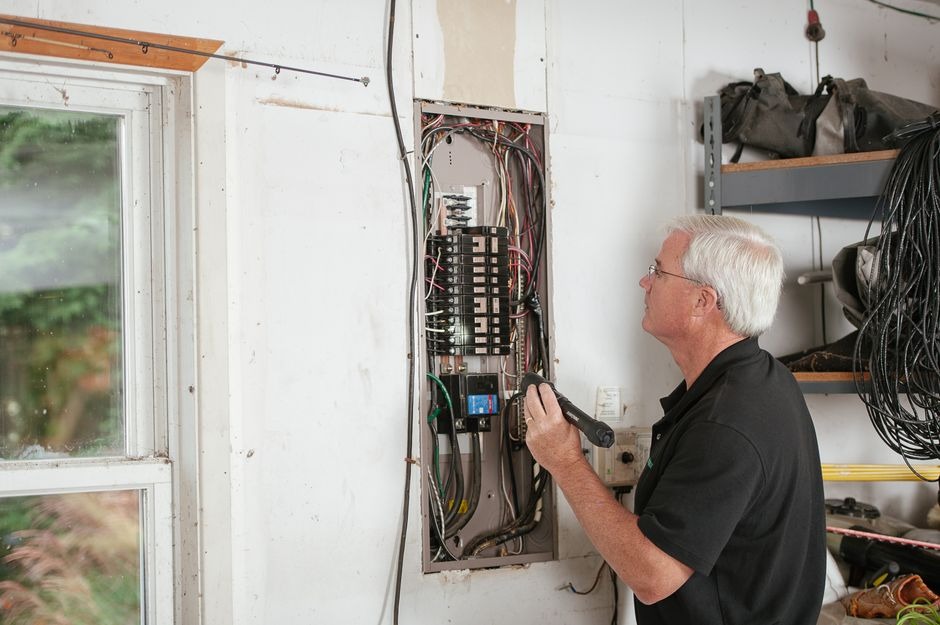
Most homes were wired for the way people lived when the house was built, not for the way they live now. A single room today may run a television, a gaming console, a laptop charger, a space heater, and a window unit at the same time, and every one of those draws power through wiring that was planned for a far lighter load.
The system rarely announces that it has reached its limit. It gives small hints instead, and those hints are easy to explain away as quirks of an older house. Understanding what the hints mean, and why they appear in the first place, puts a homeowner in a much stronger position.
Why Older Systems Reach Their Limit
Every home eventually reaches a point where the system behind the walls no longer matches the way the household actually lives. Worn wiring and tired panels need repair work, and in many homes extra circuits have to be installed as well, which is not something a homeowner can safely sort out alone.
Qualified electrical work is the dependable answer here, because a trained professional can test what is actually happening inside the system rather than guessing at it. The sensible step is to hire a licensed electrician for electrical repair and installation before a small fault starts affecting the rest of the house. Handled early, these problems stay contained, and the household carries on without the disruption of a sudden failure.
How Household Demand Has Changed Over the Years
The number of things plugged in at any given moment has grown steadily, and it has grown quietly. Kitchens hold more appliances than they once did. Home offices run equipment all day in rooms that were only ever meant to hold a lamp and a radio. Garages now charge vehicles. Outdoor spaces carry lighting and sound systems that stay powered through the evening.
None of this arrived in one dramatic moment, which is why so few people connect their rising demand to the age of the system supplying it. The house looks the same as it always did. What changed is how hard it is being asked to work, and an older system has no way of signaling that it is being pushed beyond what it was designed to carry.
Signs That a Home Is Asking Too Much of Its System
The clearest warnings are the ones people get used to. Lights that dim when a large appliance starts up are telling you something. So is a breaker that trips whenever two particular devices run together, or an outlet that feels warm when you unplug a cord from it.
Other signs are quieter. A faint buzzing near a switch, a slight burning smell that comes and goes, a plug that no longer grips firmly, or a room where everything runs noticeably slower than the rest of the house. Each of these is a symptom rather than an inconvenience, and the household that treats them as background noise usually ends up dealing with a much bigger interruption later.
Why Older Houses Feel the Pressure First
Age affects more than the wiring itself. Insulation around older conductors becomes brittle over the decades, connections loosen slightly as the house settles and temperatures shift, and panels designed for a modest number of circuits end up serving a home with far more going on in it.
Renovations add another layer. A kitchen that was opened up, a porch that was enclosed, a garage converted into a living space: each change adds demand to a system that was never recalculated for it. Work done piecemeal over many years by different hands tends to leave a patchwork, and patchwork systems rarely fail in obvious places.
The Risk of Letting Small Warnings Go
A tripping breaker is often treated as an annoyance to be worked around by moving a device to another outlet. That reaction misses the point entirely. The breaker is doing exactly what it exists to do, and switching rooms simply shifts the strain somewhere else in the house.
Heat is the real concern. When a connection is loose or a circuit is carrying more than it should, energy that ought to pass straight through turns into warmth inside a wall where nobody can see it. That warmth builds slowly and silently, and the materials around it are not meant to absorb it indefinitely.
Habits That Reduce Strain Around the House
A good deal can be done without touching the system at all. Spreading demand across different rooms rather than loading one circuit is a straightforward habit, and so is unplugging equipment that sits idle for most of the day. Power strips should carry light electronics, not appliances that pull heavily, and running several high-draw devices at once in a single room is worth avoiding where possible.
It also helps to keep track of what changes. If a room begins behaving differently after new equipment arrives, the timing is useful information.
Knowing When to Stop Managing and Start Checking
There is a difference between a system that needs a little care in how it is used and one that is genuinely struggling. Occasional dimming when a large appliance kicks in sits in the first category. Repeated trips on the same circuit, warmth around outlets, or any smell of burning sits firmly in the second, and no habit adjustment will resolve it.
The honest test is whether the household has started building its routine around the problem. When people avoid certain outlets, run appliances at staggered times to keep the breaker happy, or warn guests not to use a particular switch, the system has already told them what it needs. A home should serve the people in it, not the other way around, and a system that is quietly setting the rules has earned a proper look from someone qualified to give it one.