
Half the fun of owning a home is doing things yourself. The other half is knowing when not to. The trick is telling the two apart before you are three days into a project that has spiraled well past your skill level, your tools, and your weekend.
This guide is about drawing that line: which home projects are genuinely DIY-friendly, which ones you should hand to a pro, and how to tell the difference before you pick up the crowbar.
Each section answers one question, so skip to whatever you are weighing.
How do you decide DIY versus hire a pro?
Weigh four things: your skill, the tools required, the stakes if it goes wrong, and what your time is worth. A project that is low-stakes, needs only basic tools, and is easy to redo is perfect for DIY. One that touches structure, wiring, plumbing, or permits usually is not.
The honest test is what happens if you get it wrong. A bad paint job means repainting. A bad electrical job can mean a fire. When the downside is safety, water damage, or a failed inspection, the money you save doing it yourself is not worth the risk.
Which projects are genuinely DIY-friendly?
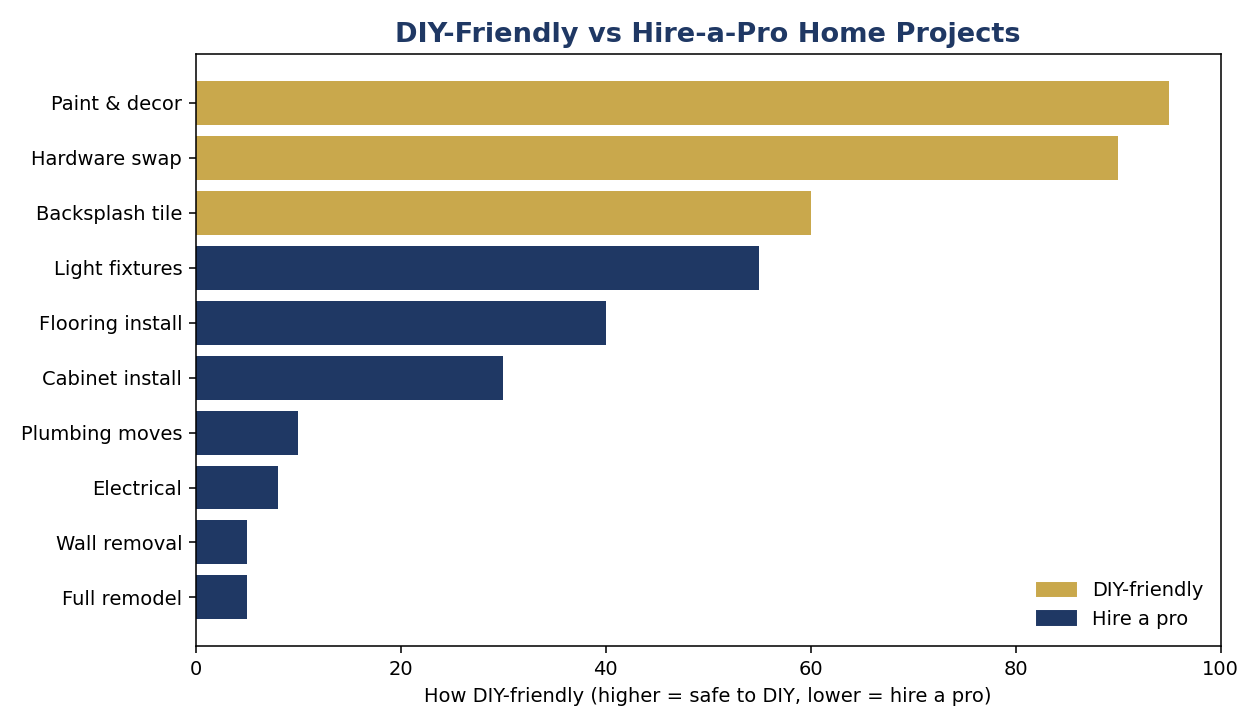
The cosmetic, reversible ones. Painting, swapping cabinet hardware, changing light fixtures (with the power off), simple shelving, and refreshing decor are all satisfying weekend wins that are hard to truly ruin. The chart and table below sort common projects by how DIY-friendly they really are.
| Project | Verdict | Why |
|---|---|---|
| Paint, decor, hardware | DIY | Low stakes, basic tools, easy to redo |
| Light fixtures, backsplash | DIY with care | Doable, but respect wiring and prep |
| Flooring, cabinet install | Depends | Skill and tools decide; mistakes are costly |
| Plumbing, electrical, walls | Hire a pro | Safety, permits, and structural risk |
Treat this as a starting point, not a rule. Your own experience shifts the line, an experienced DIYer can tackle more, while a first-timer should stay conservative. The categories hold, though: the higher the stakes, the stronger the case for a professional.
Which jobs should you never DIY?
Anything involving major electrical, gas, structural changes, or significant plumbing. Moving a load-bearing wall, rewiring a panel, relocating gas lines, or re-plumbing a bathroom carry real danger and almost always require permits and inspections you cannot skip.
These are not about pride or skill, they are about consequences. A mistake here can burn the house down, flood a floor, or compromise the structure, and it can void insurance or derail a future sale. This is exactly the category where hiring a licensed pro is the only sensible call.
How do permits factor into the decision?
If a project needs a permit, that is a strong signal it belongs with a professional. Permits exist for work where mistakes are dangerous or hard to see, and inspectors expect it done to code by someone who knows the rules.
Doing permitted work without a permit can come back to bite you at resale, when an inspection or disclosure reveals unpermitted changes. A good contractor handles the permitting as part of the job, which removes one of the most confusing parts of a bigger project.
What does DIY actually cost you?
More than the materials. Factor in tools you may only use once, your weekends, the learning curve, and the very real chance of a costly do-over. A tiled backsplash looks cheap until you count the wet saw, the wasted tile, and the second attempt.
Sometimes DIY genuinely saves money, and sometimes a pro does it faster, better, and for not much more once you price your own time and mistakes honestly. Run the real math, not just the material cost, before deciding a project is worth doing yourself.
When does hiring a pro actually save money?
More often than people expect on the bigger jobs. A pro brings the right tools, buys materials at trade prices, works faster, and gets it right the first time, which avoids the expensive do-overs that eat up DIY savings.
For anything structural, technical, or on a deadline, professional work is usually the cheaper path once you account for time and risk. The savings from DIY are real on small cosmetic jobs and often illusory on complex ones.

How do you tackle a hybrid project?
Split the work by risk. On many remodels you can DIY the cosmetic parts, demolition, painting, decor, while a pro handles the technical core, the wiring, plumbing, and structure. This blend can genuinely lower the cost without gambling on the dangerous parts.
The key is coordinating with your contractor so your DIY work does not create problems for theirs. Agree up front on who does what and in what order, and a hybrid approach gives you both savings and a result that passes inspection.
What are the signs a DIY project is over your head?
You hit something structural you did not expect, you are guessing at code, the tools cost more than hiring out, or the job stalls half-finished for weeks. Those are all cues to stop and call someone before a small problem becomes an expensive one.
There is no shame in tapping out. The costliest jobs a pro sees are often half-done DIY projects that went wrong. Recognizing the ceiling of your skills early, before the damage is done, is itself a smart homeowner move.
How do you avoid DIY mistakes that hurt resale?
Keep permanent, visible, and technical work up to a standard a buyer or inspector will accept. Sloppy tile, obvious amateur electrical, or unpermitted changes can knock real money off a sale or scare buyers off entirely.
The rule of thumb: DIY the things that are easy to redo or purely cosmetic, and hire out anything that will be inspected, is hard to reverse, or is front and center. Protecting your home’s value is part of deciding what to take on yourself.
What tools are actually worth owning for DIY?
A solid starter kit covers most cosmetic projects: a good drill/driver, a level, a stud finder, a utility knife, quality painting supplies, and a basic hand-tool set. These pay for themselves quickly across the small jobs that make up most DIY.
Beyond that, rent before you buy. A tile saw, a floor nailer, or a paint sprayer is worth renting for a single project rather than buying and storing. If a job needs a specialty tool you will use once, factor that rental into whether DIY still makes sense versus hiring out.
How do you budget a DIY project realistically?
Price the materials, then add a real cushion for waste, mistakes, and the extra trip to the store you will inevitably make. First-timers routinely underestimate how much tile, paint, or lumber a job actually eats, so a fifteen to twenty percent buffer keeps you from stalling.
Include tools and your time in the math too. Once you honestly account for a rented saw, a wasted box of tile, and three lost weekends, some projects that looked cheap start to look like a job worth handing to someone who does it every day.
What are the most satisfying beginner projects?
Painting a room, swapping out dated hardware and fixtures, adding open shelving, refreshing a tired piece of furniture, and updating a light fixture all deliver a big visual change for little money and low risk. They are the perfect place to build confidence.
These wins matter beyond the result: they teach you how your home is put together and where your comfort zone really ends. Start with reversible, cosmetic projects, and you will get a clear feel for which bigger jobs you can take on next and which to leave alone.
How do you know if a wall is load-bearing?
You often cannot tell for certain from the surface, which is exactly why this one belongs with a pro. Walls that run perpendicular to the floor joists, sit above a beam, or stack over a lower wall are frequently load-bearing, but confirming it takes real inspection.
Removing or cutting into a load-bearing wall without proper support can cause sagging, cracks, or worse. Never guess with structure. A contractor or structural engineer can confirm what a wall is doing and design the right beam or support before anything comes down.
What DIY mistakes are the most common?
Skipping prep, rushing, using the wrong materials, and not measuring twice. A paint job fails because the surface was not cleaned and primed; a shelf falls because it missed the studs; tile cracks because the surface was not flat. Most DIY failures trace back to shortcuts on the boring steps.
The other big one is starting demolition before you understand what is behind the wall. Slowing down, following the prep steps, and knowing where the wiring and plumbing run prevent the majority of the disasters that send DIYers looking for a pro to fix it.
How do you plan a phased home refresh on a budget?
Tackle it room by room and separate the quick cosmetic wins from the bigger investments. You might DIY paint and decor across several rooms now, then save toward the professional kitchen or bathroom work later, so progress never fully stops.
Sequencing matters: do the dusty, disruptive work before the finishes, and finish one space before moving on so you always have a completed room to enjoy. A phased plan lets a real budget stretch across time without living in a permanent construction zone.
What questions should you ask before hiring?
Confirm they are licensed and insured, ask to see completed local projects, get a clear written scope and timeline, and pay attention to how well they communicate from the first call. Vague answers early usually mean headaches later.
Ask how they handle permits, change orders, and cleanup, and whether they are comfortable with any DIY portions you plan to keep. A good contractor answers plainly and sets clear expectations rather than dodging the specifics.
How do you find a trustworthy contractor near you?
Start with proven local work, licensing, and real reviews, then talk to a couple of options before deciding. Local experience matters, since a team that works in your area knows the permitting, the inspectors, and how homes here are built.
For Denver-metro homeowners, a team that regularly handles home remodeling in Centennial will understand both the construction realities and the local process, which is exactly what you want backing the parts of a project you should not DIY.
Does DIY work affect home insurance or resale?
It can, in ways people rarely think about until it matters. Unpermitted or clearly amateur work, especially electrical or plumbing, can complicate an insurance claim if it contributes to damage, and it can surface as a red flag during a home inspection when you sell.
Cosmetic DIY almost never causes problems, but technical work that should have been permitted and professional can cost you at closing or leave a claim disputed. When a project touches systems or structure, having it done and documented by a licensed pro protects both your coverage and your home’s future value.
The Bottom Line
Knowing what to DIY and what to hand off is one of the most valuable skills a homeowner can have. Keep the low-stakes, reversible, cosmetic work for yourself, and hire a pro for anything structural, technical, permitted, or dangerous. That line protects your budget, your home, and your weekends.
When a project clears your skill level, calling in a professional is not a failure, it is the smart, money-saving move that protects your home and your budget at the same time. Do the honest math on materials, tools, and your own time, respect the jobs that carry real safety or resale risk, and lean on a trusted local pro for the technical work. Do that, and you get the best of both worlds: the satisfaction and savings of DIY where it makes sense, and the safety and quality of expert work everywhere it truly counts.