
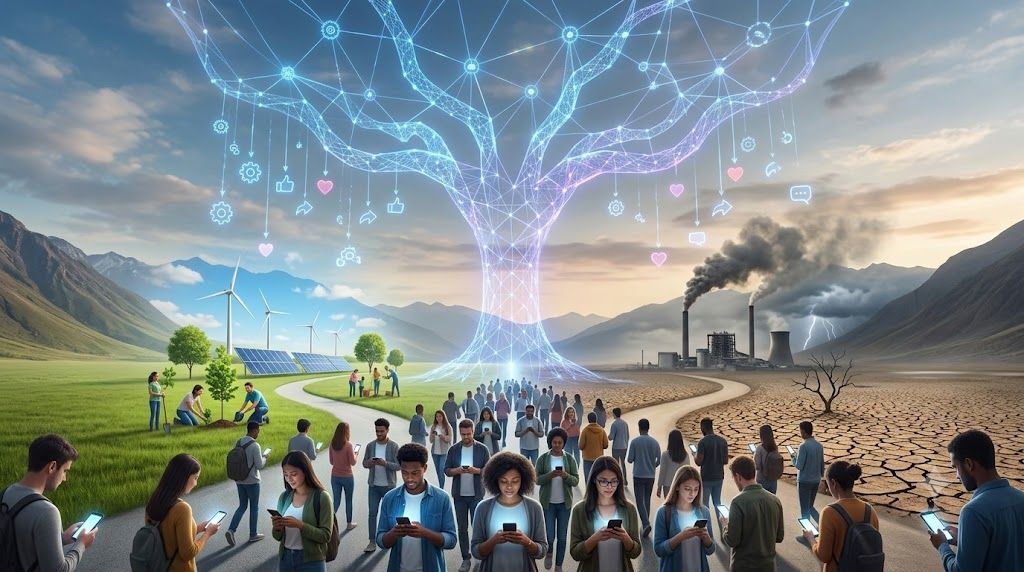
Imagine two people opening TikTok at the same moment. One sees videos praising renewable energy policies, while the other is flooded with clips criticizing climate regulations. Neither searched for these topics—algorithms made the decision.
To billions of users of social media, technology platforms are not just mediums to connect anymore; they are lenses through which people see the world, especially topics as sensitive as global warming and policies made to combat it. The way these algorithms work on recommending content for people’s feed is completely changing public perception. To creators who wish to make an impact, this becomes a highly competitive space, and at times, some may go to the lengths of trying services that will give them TikTok views with fast delivery.
It is important to understand this phenomenon for environmental journalists and policymakers. The impact of algorithmic distribution on the public perception of global warming policies is not necessarily achieved by prioritizing truth, but by engagement.
Understanding How Social Media Algorithms Work
Social media algorithms are complex mathematical formulas designed to maximize user time spent on a platform. They don’t inherently value accuracy or educational depth; they value interaction. Platforms measure several key “engagement signals” to determine which posts get promoted.
What Recommendation Algorithms Measure:
- Watch time and completion rate (critical on TikTok and YouTube)
- Shares (indicates viral potential)
- Comments (signals conversation and controversy)
- Likes and Saves (suggests user value)
- Rewatches
Why Climate Change Content Performs Well Online
Climate change is inherently potent material for these algorithms. It often evokes strong emotions—fear of future disasters, hope for solutions, or anger over policy costs. Content that is visually storytelling-focused, emotionally charged, or highly controversial naturally triggers the engagement signals algorithms crave, causing discussions around environmental policy to frequently go viral.
How Algorithms Influence Public Opinion
One of the ways by which algorithms influence perception is through personalization, and this leads to various psychological and sociological effects. Confirmation bias is utilized by platforms; this is a natural inclination of humans to search for information that confirms their beliefs. As a result of personalization, one experiences filter bubbles – being shown only opinions that one holds, and echo chambers, online spaces where these opinions get amplified.
An example of an algorithm setting the agenda in terms of influencing perception is a wildfire video going viral simply because of its emotional appeal. On the contrary, an elaborate explanation of a new carbon trading system from the government will attract a lesser number of viewers. This is because of the algorithmic tendency to prioritize emotions over information. The concept is also supported by agenda-setting theory, according to which the media do not tell you what to think, but what to think about.
Positive Effects of Algorithmic Distribution
It’s important to acknowledge that algorithmic distribution is not universally problematic.
- Climate Awareness: Global movements like Fridays for Future gained international momentum purely through algorithmic amplification.
- Educational Creators: Scientists and climate educators have built massive audiences, making complex science accessible to millions.
- Scientific Communication: Authoritative bodies like NASA and NOAA use social media to bypass traditional gatekeepers and speak directly to the public.
Challenges and Risks
However, the risks are substantial. Recommendation systems can inadvertently prioritize sensational misinformation over dry, factual data. Climate change misinformation, greenwashing by corporations, and political polarization are significantly amplified by engagement-focused algorithms.
The Social Amplification of Risk Framework explains how digital platforms can exacerbate public fears or, conversely, create a false sense of security, distorting the perceived urgency of climate policies.
Recent data shows the variance in platform focus:
| Platform | Primary Algorithm Focus | Common Public Perception Effect |
| TikTok | Watch Time & Completion Rate | Rapid, emotional viral spread of visual information. |
| YouTube | Watch Time & Session Duration | Long-form education but also risk of rabbit-hole radicalization. |
| Comments & Shares | Creation of echo chambers; significant political polarization. | |
| X (Twitter) | Trending Topics & Interaction | Politicized, real-time debates that often obscure policy nuance. |
The Role of Content Creators
Content creators are the lifeblood of this algorithmic ecosystem. They often understand platform dynamics better than scientists or policymakers. Responsible communication is vital, but so is visibility. Understanding how the algorithm prioritizes content is crucial, particularly when creators consider how engagement signals help determine which posts get promoted.
Creators think about the role initial traction plays in gaining exposure, as well as the possibility of utilizing signals such as high engagement or even looking at ways to get TikTok views quickly, in order to ensure that their content about climate policies gets more visibility.
How Readers Can Evaluate Climate Information
To navigate this landscape, digital media literacy is essential. Readers must consume climate information critically.
- Verify original sources: Is the data from NASA, IPCC, or a reputable peer-reviewed journal?
- Read scientific reports: Don’t rely solely on a 60-second summary of a major scientific finding.
- Compare viewpoints: Actively seek information from sources outside your typical echo chamber.
- Avoid sensational headlines: If a policy headline seems designed to make you angry, it’s working as intended by an algorithm.
Social media algorithms are not passive channels of communication. Instead, they play the role of active gatekeepers that affect people’s perceptions about the global warming policy agenda by valuing engagement metrics above factual content. Although they provide unique possibilities for learning and awareness-raising, there is a danger associated with the misuse of this powerful tool by spreading false information and polarizing people. As algorithms determine visibility rather than facts, people should be media literate. rming policy agenda by valuing engagement metrics above factual content. Although they provide unique possibilities for learning and awareness-raising, there is a danger associated with the misuse of this powerful tool by spreading false information and polarizing people. As algorithms determine visibility rather than facts, people should be media literate.