
It started one evening after dinner when my husband brought up the conversation we had both been circling around for months.
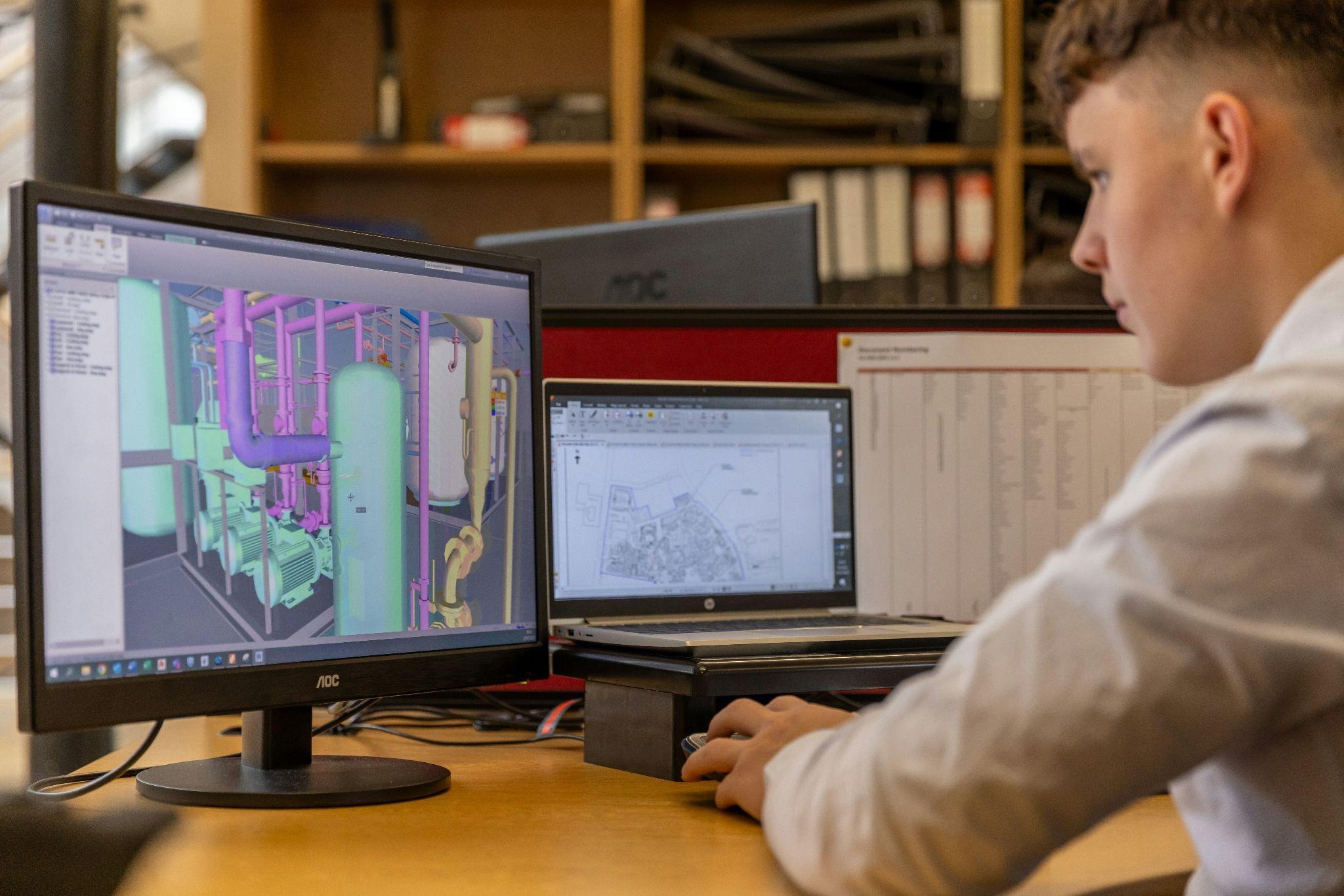
Photo by ThisisEngineering on Unsplash
He had been looking at postings for senior project engineering roles and systems engineering positions, the kind of work he was genuinely excited about, and nearly all of them listed a master’s degree as required or strongly preferred.
He has been working as an engineer for seven years now with a solid undergraduate foundation and good performance reviews, but in aerospace and defense contracting, the graduate credential is increasingly the gate that opens the next tier of opportunity. We talked about what pursuing a degree would actually mean for us as a family, for our budget, for our evenings and weekends for the next two or three years.
There was excitement in the conversation, but also a real undercurrent of anxiety about whether this was the right moment, whether we could afford it, and most pressingly, whether an online engineering master’s degree would actually be respected by the employers he was targeting or whether it would read as a compromise version of the real thing.
The logistics felt overwhelming, and the stakes felt high in a way that general graduate school advice did not address. This was not a decision we could make lightly or on a whim.
Why the Engineering Credential Question Is Different From Other Graduate Decisions
The thing that made the research process harder was that engineering is specialized enough that the usual playbook for picking a graduate program did not quite map. The accreditation question mattered in a different way because
ABET accreditation provides assurance that a college or university program meets the quality standards of the profession for which that program prepares graduates.
What We Found When We Started Looking at Online Engineering Programs
When we started digging into what the online graduate engineering landscape actually looked like, we found that the programs that rose to the top were not the ones with the slickest marketing but the ones with established engineering colleges, research-active faculty, and employer partnerships that gave their graduates specific industry credibility. The University of Central Florida kept coming up in our research, and not just because of its size.
UCF has built partnerships with the biggest names in engineering and technology, including NASA, Lockheed Martin, Boeing, Siemens and Walt Disney World, which is exactly the kind of employer network that matters when you are trying to break into aerospace and defense roles that require security clearances and demonstrated technical depth. What distinguished UCF from other online engineering programs was that
UCF’s online engineering programs are designed by the same award-winning faculty using the same rigorous content and standards as our on-campus programs, and U.S. News & World Report ranks UCF as one of the best graduate education programs in the nation for engineering, mechanical engineering, and civil engineering. When you aim for a graduate engineering degree online, this distinction matters enormously because what shows up on the diploma is the same regardless of delivery mode, and what employers see when they review a resume is the engineering school’s reputation, not a separate online track.
Degree seekers can complete a program in as little as 2 years from their initial start date, which fit the timeline we were working with and felt realistic given his work schedule.
Making It Work as a Household
The practical dimension of making it work as a household came next.
Time management is often cited as a top challenge for adult learners pursuing undergraduate and graduate studies, and in engineering specifically, the coursework is not the kind you can skim through on a lunch break.
We talked through what two courses per semester would actually demand in terms of study time, which based on what we had read and heard from people who had done it, meant somewhere between fifteen and twenty hours a week on top of a full engineering workload. That is real time, the kind that comes out of evenings and weekends, and it means renegotiating how we split household labor and childcare during the degree period.
I had to be honest with myself about what it would feel like to be the spouse holding down more of the logistics while he was buried in thermodynamics problem sets or coding assignments, and whether I could sustain that for two years without resentment building. Research on balancing family responsibilities with major decisions consistently shows that these transitions require open communication and realistic expectations from both partners.
The Financial Planning Piece
The financial planning piece was the other major area we needed to work through carefully. The total cost of a UCF-level online engineering master’s degree runs somewhere in the range of thirty to forty thousand dollars depending on the specialization and whether you qualify for in-state tuition, which is a significant investment but also meaningfully less than many private engineering programs that can run twice that.
A 2022 report from Society for Human Resource Management (SHRM) found that 48% of employers offer undergraduate or graduate tuition assistance as a benefit, and my husband’s employer does have a tuition reimbursement program, though it caps at five thousand dollars per year and requires him to stay with the company for at least two years after completing each reimbursed course. That means we would still be covering a substantial portion out of pocket or through loans, and we needed to run the numbers honestly on what the salary differential would look like once he had the degree and whether the return on investment justified the upfront cost. The data on engineering salaries with advanced degrees is encouraging.
While on average graduates with a bachelor’s degree in engineering typically have relatively high earnings, the differences across subfields of engineering are significant, and in the specialized areas he is targeting, the master’s degree is increasingly not just a credential for advancement but a baseline requirement for entry.
The Emotional and Relational Dimension Nobody Talks About
There is an emotional and relational dimension to this decision that most program comparison articles completely ignore, and it is the part that has been hardest for me to wrap my head around. What does it actually feel like to be the supporting spouse during a graduate degree, especially when that degree is in a demanding technical field that requires sustained focus and cognitive load?
Grad school is a long-term commitment: it requires years of sustained effort, and no one can work around the clock for years and stay healthy. The couples we have talked to who have been through this said the thing that made the difference was treating the degree period as a defined chapter with a clear endpoint rather than an indefinite state of one partner always being unavailable.
Another important way to keep a relationship strong is to acknowledge the sacrifices your partner makes while you’re in grad school, and research shows that couples who felt most thankful had more satisfied spouses. I know there will be weeks when I feel like a single parent even though we are both in the house, and weeks when he feels guilty about not being more present, and the question is whether we can name that honestly when it happens rather than letting it fester.
What This Looks Like With Kids in the Picture
We also had to think through what this looks like with kids in the picture. Our children are young enough that they will not fully understand the specifics of what their dad is doing, but old enough to notice when he is less available for bedtime or weekend activities.
How do we explain to a six-year-old why dad has to study instead of playing outside, and how do we make sure they do not internalize that as being less important than schoolwork? The families we spoke to who navigated this successfully said the key was involving the kids in the process in age-appropriate ways, letting them see the hard work their parent was putting in and celebrating the milestones together, so that the degree became something the whole family was working toward rather than something that took one parent away.
Adult learners often juggle education with full-time jobs, family responsibilities, and other life commitments, and the system struggles to accommodate the diverse needs of learners from various walks of life.
Choosing the Right Engineering Specialization
The specific engineering specializations that the online master’s landscape offers is another piece we had to research carefully because not all engineering master’s programs are structured the same way.
Systems engineering is the specialization my husband is leaning toward because it is the one most aligned with the project leadership roles he wants to move into, but UCF also offers strong programs in aerospace engineering, civil engineering, industrial engineering, and mechanical engineering, all of which have slightly different career trajectories and employer demand patterns. Systems engineering is appealing because it sits at the intersection of technical depth and project management, and
more than 9 out of every 10 engineering graduates at the bachelor’s and master’s levels were employed or continuing education within six months of graduation, which gives us confidence that the degree will actually translate into job mobility rather than just being another credential on paper.
Where We Have Landed
Where we have landed is not a final yes or no but a state of serious consideration that feels more grounded than where we started. We know what the degree would cost, what the time commitment looks like, which programs have the employer recognition that matters in his field, and what the next two or three years would require from both of us and from our family.
There is genuine excitement about what the degree could open for him professionally, not just in terms of salary but in terms of the kind of work he would get to do and the problems he would get to solve. But there is also a realistic appreciation of what it will take to get there, the evenings he will be at the computer instead of on the couch, the weekends I will be managing the household solo, the vacations we might postpone because tuition is due.
What this process has taught me is that big decisions like this one are not about finding a perfect answer but about gathering enough information and having enough honest conversations that whatever we decide feels like a choice we made together with our eyes open, rather than something that happened to us.
That kind of shared deliberateness feels like the foundation of a marriage that can handle hard things, and whether or not he ultimately enrolls in the program, I am grateful we did the work to think it through carefully.