
It can be confusing, and there are plenty of misconceptions when it comes to bringing liquids in luggage. When packing for your flight, surely there are questions that might have crossed your mind, like, how many oz can you bring on the plane? There might be some guidelines for that, right?
When you fly, there are rules you need to comply with, like the Transportation Security Administration (TSA) rules for liquids in your carry-on bag. If you’re confused and not sure how your toothpaste, shampoo, and other personal liquids can make it on the plane with you, don’t worry, this article has you covered.
From packing your small toiletries, like shampoo and toothpaste, to baby essentials that go perfectly with a lightweight stroller, this article will explain everything.
Understanding the TSA 3-1-1 Rule for Carry-on Liquids
You may have heard about the 3-1-1 rule of the TSA for liquids in your carry-on. This rule tells exactly how many oz can you bring on the plane without having any issues at security checkpoints. But what exactly does that mean?
- 3: All your liquids, gels, creams, and aerosols must be sized at 3.4 ounces (100 milliliters) or less
- 1: All containers must fit in one clear, quart-sized plastic bag
- 1: You are only allowed to bring one bag of liquids
This rule is applicable to almost all personal care items, like toothpaste, shampoo, mouthwash, gel deodorant, liquid make-up, moisturizers and hairspray. If you’re travelling with someone, consider pooling all your travel-size liquids, then dividing them equally into two 1-quart size bags. In this way, each of you will have everything you need while still complying with the rules.
It is better to pack your bag of liquids last so that it is easily accessible during security screening. You’ll have to remove it from your carry-on to go through the X-ray in a separate way.
Packing the Perfect Quart-Sized Clear Toiletry Bag
Now that you know how many oz can you bring on the plane, the next step you need to do is to pack the liquids in an efficient manner. When packing, a quart-sized clear toiletry bag will be your best friend. This bag size is compliant with the TSA rule and is very hassle-free during security checks. Here’s how to pack it like a professional:
- Choose the right bag
Pick a bag that is transparent and resealable. Preferably one that fits all your liquids comfortably without overstuffing. Better to get the durable bags because they prevent leaks and spills.
- Organize by type
For you to have easy access to your things, group items, like toothpaste, shampoo, lotion, and baby wipes, separately. You won’t regret doing this, especially if you’re travelling with a lightweight stroller and you need quick access to baby essentials.
- Use travel-sized containers
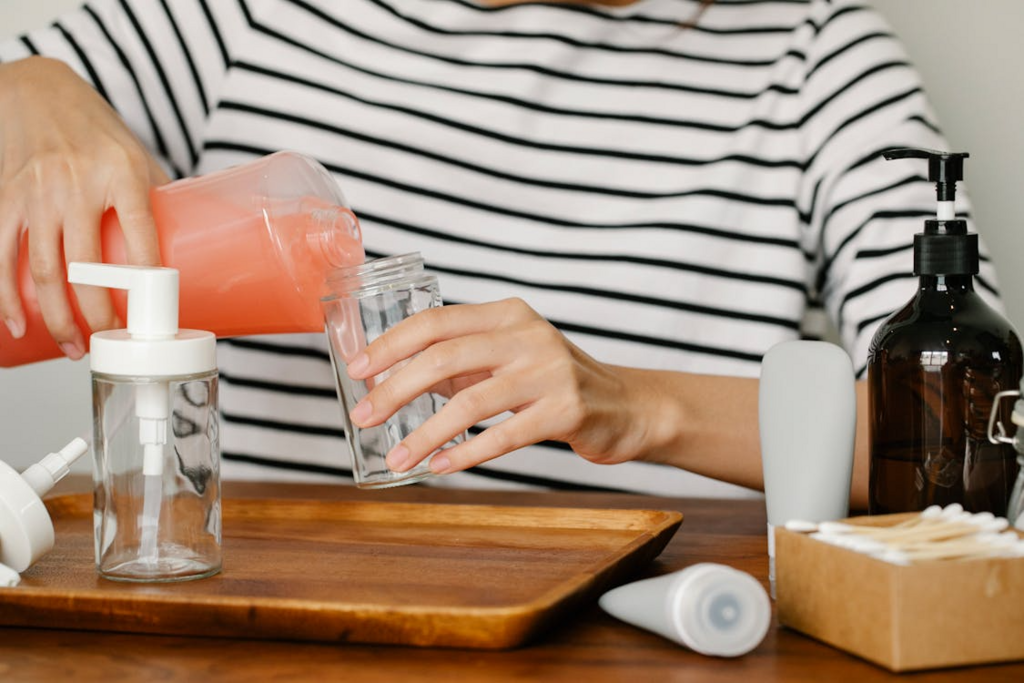
Have bottles with 3.4 oz (100 mL) capacity. Then, transfer your liquids into them. Just a tip, get the silicone travel bottles because they are leak-proof and very easy to squeeze.
- Maximize space
Stand bottles upright and use small pouches or elastic bands to keep the items snug. Roll the smaller items, like makeup sticks or ointments, to save extra space.
- Double-check before security
Make sure all your bottles are under the 3-1-1 rule limits. Also, keep your bag easily accessible for quick removal at the checkpoint.
Essential Exceptions for Medications and Baby Formula
While there is a rule for liquids, the TSA have exceptions for essential items like medications and baby supplies. This is to support everyone’s health and those families who fly with infants or young children.
- Medications
Prescription and over-the-counter medications are allowed in quantities larger than 3.4 oz, only when they’re medically necessary. Liquid medications do not need to fit in your quart-sized bag, though you need to declare them to TSA officers during screening. Just keep the medications in their original labelled containers, and you’re good to go.
- Baby Formula, Breast Milk, and Infant Food
If you’re a parent travelling with your baby, you are allowed to bring baby formula, breast milk, juice, and purees. But, they need to be in reasonable quantities to exceed the standard liquid limits.
Remove these items from your bag for separate screening. Doing this will make your travel easier, especially when managing gear like a lightweight stroller and other essentials for your baby. The good thing is that ice packs, freezer packs, and gel packs are allowed, too, to cool these items.
Navigating Airport Security With Liquid-Filled Items
When you’re not sure how many oz can you bring on the plane, going through security at the airport can be really scary. Just imagine a lot of things can happen, especially when your carry-on is full of multiple liquid-filled items. But you don’t have to worry, you just need to prepare the items and yourself.
- Place your quart-sized clear toiletry bag where you can easily access it on your carry-on.
- Make sure all standard liquids follow the 3.4 oz (100 mL) limit if they’re in your carry-on.
- Before screening, declare liquids over the limit, like medications, baby formula, breast milk, or infant food.
- Remove your liquids bag from your carry-on when instructed by TSA officers.
- Expect that there will be possible additional screening for liquid-filled items. Don’t panic, this is normal, and it happens to many people as well.
- Use containers that are leak-proof to prevent spills during inspection.
- Allow extra time at security, especially when travelling with baby supplies or a lightweight stroller.
- Follow TSA instructions in a calm manner. In this way, the screening process will be quick and stress-free.
Rules for Duty-Free Liquids and International Connections
When travelling internationally, it is more important that you know how many oz can you bring on the plane. Since it can’t be helped when abroad, you purchase things like duty-free liquids. These items are often exempted from standard carry-on limits, but specific rules still apply.
- You are only allowed to purchase duty-free liquids after the security checkpoint or onboard the aircraft.
- Items must be sealed in a secure, tamper-evident bag (STEB). The receipt inside should be visible.
- Remember that the receipts are only valid for up to 48 hours, depending on the country and airport.
- If you have an international connection, duty-free liquids may be screened again at your transfer airport.
- Don’t open the sealed bag before your final destination. If you do that, there’s a chance the liquid will be confiscated.
- Some countries enforce stricter liquid rules, even for duty-free purchases.
- When in doubt, pack duty-free liquids in your checked luggage before your next flight segment.
- If you’re travelling with your family, you should have a solid plan, especially when managing purchases alongside carry-ons or a lightweight stroller.
Dealing With “Spreadable” Foods and Snacks at Checkpoints
If you’re still not aware, there are certain foods that are treated like liquids under TSA rules. You also need to understand how “spreadable” foods are handled at security checkpoints.
- Foods that are soft, spreadable, or have paste-like consistency are considered liquids or gels by TSA.
- Common examples are peanut butter, yogurt, hummus, cream cheese, jams, and dips.
- These items must also follow the 3.4 oz (100 mL) limit and must fit inside your quart-sized liquids bag if carried on.
- Solid foods, like sandwiches, granola bars, crackers, and whole fruits, are generally allowed without restriction.
- Larger quantities of spreadable foods should be packed in checked luggage. Do this to avoid confiscation.
- Baby food and puree pouches are often allowed in reasonable quantities.
Pro Tips for Organizing and Labeling Your Travel Liquids
Below are tips for organizing and labeling your travel liquids.
- Use only clear, leak-proof travel bottles. In this way, the TSA agents can easily see what’s inside.
- Label each container with the product name to avoid confusion during screening.
- Transfer liquids into 3.4 oz (100 mL) or smaller containers to remain TSA-compliant.
- Group items together that are similar (toiletries, skincare, baby items) for easy access.
- Place your quart-sized liquid bag at the top of your carry-on.
- Add a small piece of tape or plastic wrap under bottle caps to prevent leaks.
- Keep the items that you’ll need in the middle of the flight, like saniitzer or lotion.
How to Handle Oversized Liquids and When to Check Them
Since not all liquids can fit within carry-on size limits, you need to decide what to pack and what to check. The following are some suggestions on how you can handle oversized liquids properly, and when placing them in checked luggage is the smartest decision.
- Any liquid container over 3.4 oz (100 mL) is considered oversized for carry-on luggage.
- It is best to pack oversized liquids in checked baggage. This is to avoid confiscation at security.
- Before you place the bottles in checked luggage, wrap them in plastic bags or leak-proof pouches first.
- Cushion liquids with clothing or soft items to prevent breakage during handling.
- Instead of checking them, consider purchasing travel-sized versions or transferring liquids into smaller containers.
- Duty-free liquids should be kept sealed in tamper-evident bags until you reach your final destination.
- Medically necessary liquids and baby supplies may exceed limits but must be declared to TSA.
Final Thoughts
Now that you know how many oz can you bring on the plane, you can have a smooth, stress-free travel experience. If you take a moment to familiarize yourself with the regulations for flying with liquids in your carry-on bag, you are ready to sail through screening with ease.
Whether you’re solo travelling, with kids, or managing a lightweight stroller, just follow these tips to make sure you have everything you need without delays or confiscations.