(photo credit: Microsoft Stock Images)
Teenagers are expected to manage schoolwork, friendships, extracurricular activities, family responsibilities, and decisions about their future, often while getting less sleep than they need. Short periods of stress are normal, but ongoing pressure without enough recovery can leave a teen exhausted. Parents who recognize changes early can help address the sources of strain before they begin interfering with daily life.
What Can Push Teens Toward Burnout?
Academic pressure is one common factor, especially when teenagers believe every grade will affect college or career opportunities. A packed schedule can compound the problem. Sports practices, jobs, clubs, homework, and social commitments may leave little unstructured time. The school environment can also influence stress. Families considering public, charter, or private schools should look beyond academic offerings and consider workload expectations and overall school culture.
Watch for Changes in Behavior
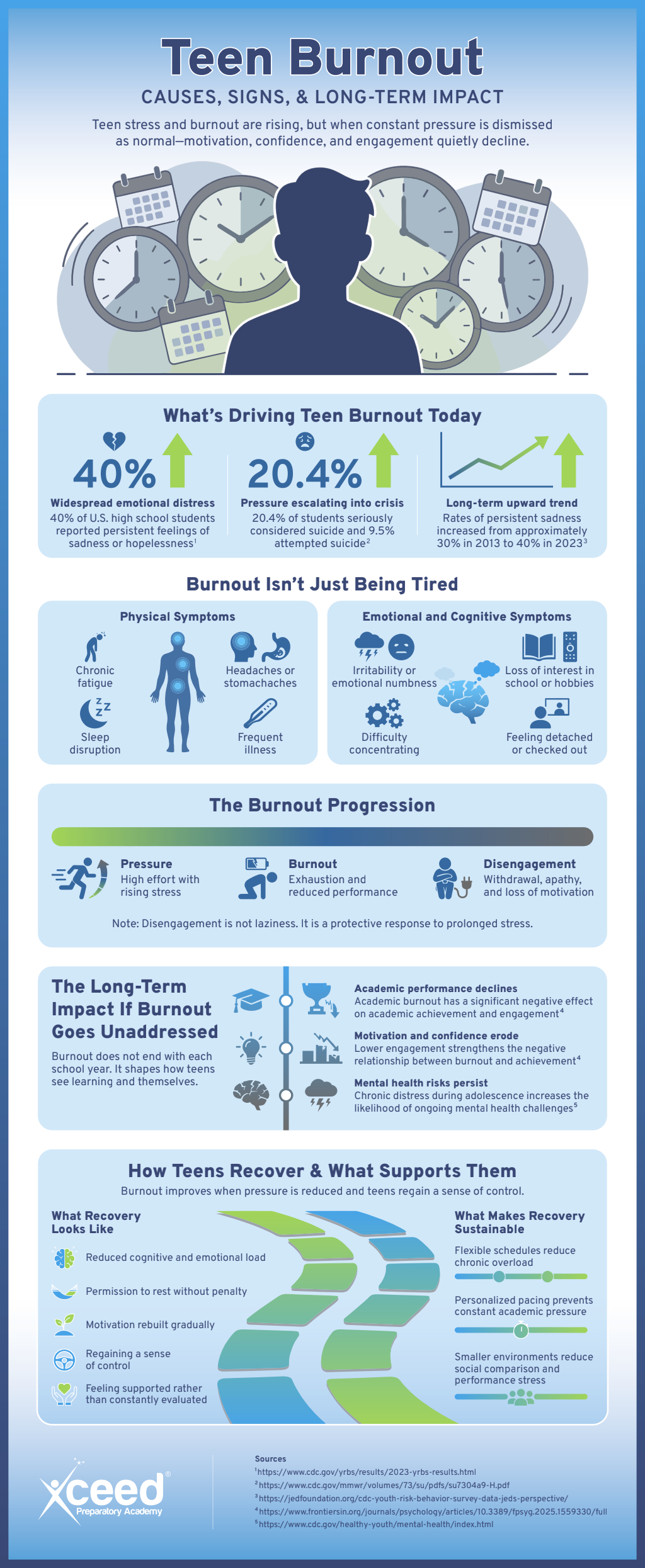
Exhaustion is an obvious warning sign, but burnout can appear in less predictable ways. A previously motivated student might procrastinate, miss assignments, withdraw from activities, or become unusually irritable. Physical complaints can occur too. Frequent headaches, stomachaches, disrupted sleep, or changes in appetite may accompany prolonged stress. Parents should avoid assuming these symptoms are simply part of adolescence.
Why Persistent Burnout Matters
Long periods of unmanaged stress can affect school performance, relationships, and emotional well-being. A teenager may also begin associating achievement with constant exhaustion. Parents can help by examining the pressures behind the problem rather than immediately pushing for better performance. Reducing unnecessary commitments, protecting sleep, and creating room for genuine downtime may help. Persistent major behavioral changes warrant a conversation with a pediatrician or qualified mental health professional.
Teen burnout deserves attention before exhaustion becomes a teenager’s normal state. Watching for patterns and making recovery part of the family schedule can help teens build a healthier relationship with achievement and stress. Look over the infographic below to learn more.