
A dog with a sensitive stomach can turn mealtime into a guessing game. Loose stools, vomiting, and constant scratching often point back to what is actually inside the bowl. Many owners spend months swapping between bags of kibble before they consider a different category of food. Fresh, minimally processed meals have become one of the more researched options for dogs that struggle with standard commercial diets.
Why Sensitive Stomachs Need a Different Approach to Dog Food
Digestive sensitivity in dogs can stem from several sources. Food allergies, gut inflammation, and a diet heavy in fillers all play a role. Traditional kibble is cooked at high heat and often includes preservatives some dogs cannot tolerate well. Fresh food takes a different route.
Jennifer Coates, DVM, writing for PetMD, has noted that fresh dog foods are free of preservatives, highly digestible, and delicious. That combination matters for dogs whose stomachs react poorly to processed ingredients.
Digestibility affects how much of a nutrient a dog’s body actually absorbs. Veterinary nutrition experts generally agree that fresh, whole-food diets can support easier digestion. That holds true as long as the food stays nutritionally complete and gets handled correctly.
- Common Sensitivity Triggers: Grains, artificial flavoring, and low-quality protein sources are frequent culprits behind digestive upset in dogs.
- Signs Worth Watching: Loose stools, excessive gas, and skin irritation often point to an ingredient the dog cannot process well.
- Why Fresh Food Helps: Gentle cooking methods preserve more nutrients while cutting back on additives that can irritate a dog’s gut.
Fresh, Gently Cooked Meals Built Around Simple Ingredients
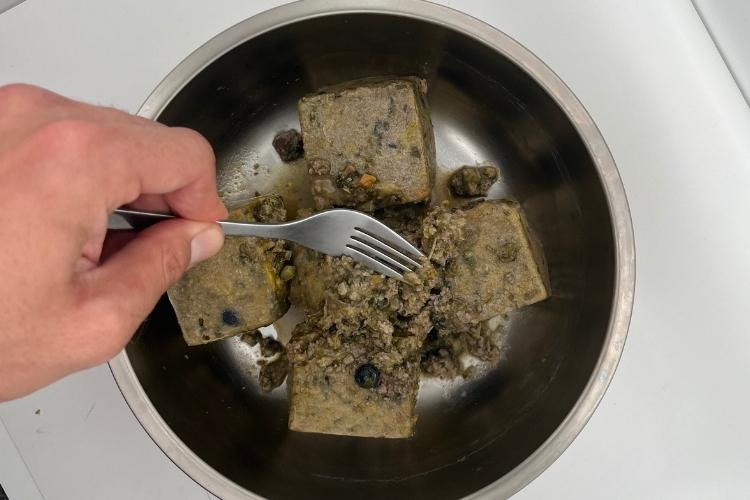
California Dog Kitchen has built its entire model around fresh, human-grade protein. The meals are gently cooked rather than extruded or heavily processed. The company sources organic ingredients and skips the fillers common in shelf-stable dog food. Meals are prepared, then frozen in individual cubes, which keeps nutrients intact until a dog is ready to eat.
Gentle cooking also plays a direct role in digestibility. High-heat extrusion, the process used to make most dry kibble, can break down proteins in ways that make them harder to digest. Lower-temperature cooking for shorter periods tends to preserve more of the original nutritional structure. That difference can matter a great deal for a dog whose gut already struggles to keep up.
Chicken is one of the more common proteins linked to food allergies in dogs. A verified alternative matters for households managing an existing diagnosis. Owners can find one at californiadogkitchen.com, a chicken-free collection built for dogs with known protein sensitivities. Each cube contains a single, traceable formula. That makes it far easier for owners to spot a reaction quickly, something multi-ingredient kibble blends rarely allow.
Organic Sourcing and Allergy-Friendly Formulas
Ingredient sourcing carries real weight for dogs with food sensitivities. Organic chicken used in select recipes carries GAP certification and meets USDA standards. That level of oversight gives owners a documented reference point rather than a marketing claim.
Coates has also pointed out that fresh food works best under two conditions. It needs to deliver complete, balanced nutrition, and it needs correct storage along the way. A perfectly formulated meal loses its benefit if it thaws too early. It also loses value if it sits unrefrigerated too long. That is why the cubes ship frozen with dry ice to preserve freshness in transit.
- GAP-Certified Chicken: Independent certification confirms the protein source meets specific animal welfare and quality standards before packaging.
- USDA Oversight: Federal inspection standards apply to the protein used in select recipes, adding a layer of accountability.
- Allergy-Conscious Recipes: Formulas are designed with common canine allergens in mind, giving owners more control over what their dog eats daily.
Portion Sizes, Storage, and Sustainable Packaging
Feeding fresh food requires a bit more planning than scooping kibble from a bag. The system is fairly straightforward once it gets established, though. Each bag contains 14 to 16 frozen cubes. The general feeding guideline runs one 4-ounce cube per 10 pounds of body weight, per day.
A 40-pound dog, for example, would eat roughly four cubes daily. Puppies, along with pregnant or nursing dogs, typically need two to three times that amount. Owners are also encouraged to recheck portions after the first two weeks, since a dog’s weight can shift.
A feeding calculator on the brand’s site helps owners land on a starting portion without doing the math themselves. Consistent portioning matters for sensitive stomachs in particular. Too much or too little fresh food can trigger stool changes, even when the ingredients themselves agree with the dog.
The bag design also reflects a broader environmental consideration. The bags use compostable kraft paper with a vegetable-based liner. That liner breaks down into soil within 180 days under industrial composting conditions. Standard plastic packaging, by comparison, can persist in the environment for centuries.
The company ships orders on a fixed weekly schedule. Anything placed by 6 a.m. Pacific time on Tuesday goes out that same week and arrives by Friday. Each order arrives in an insulated box with dry ice. Owners should avoid direct contact with the dry ice, since it is cold enough to cause burns.
Conclusion
Dogs with sensitive stomachs often need more than a simple diet swap. They need traceable ingredients, careful cooking methods, and reliable storage from start to finish. Fresh, gently cooked meals address several of those needs at once. Preservative-free recipes and single-protein options both help dogs with known sensitivities.
For many owners, what goes into a meal matters more than any label on the bag. The path that meal takes from kitchen to freezer to bowl is often the first real step. It can help solve a stomach problem that store-bought kibble never quite fixed.