
The City of Denver has a history filled with rich culture, impressive firsts, and significant individuals who helped mold this town into what it is today. But there were also several tragic events, such as the great fire of 1863 and the flash flooding that took place the following year, which destroyed businesses and took the lives of several Denver residents.
Because of those and other tragic events, Denver is home to several businesses and historic homes believed by many locals to be haunted. That’s why when sharing the important details of the city’s past, it’s essential that we include facts about the haunted history of Denver as well.
Gold Discovered in the Rockies
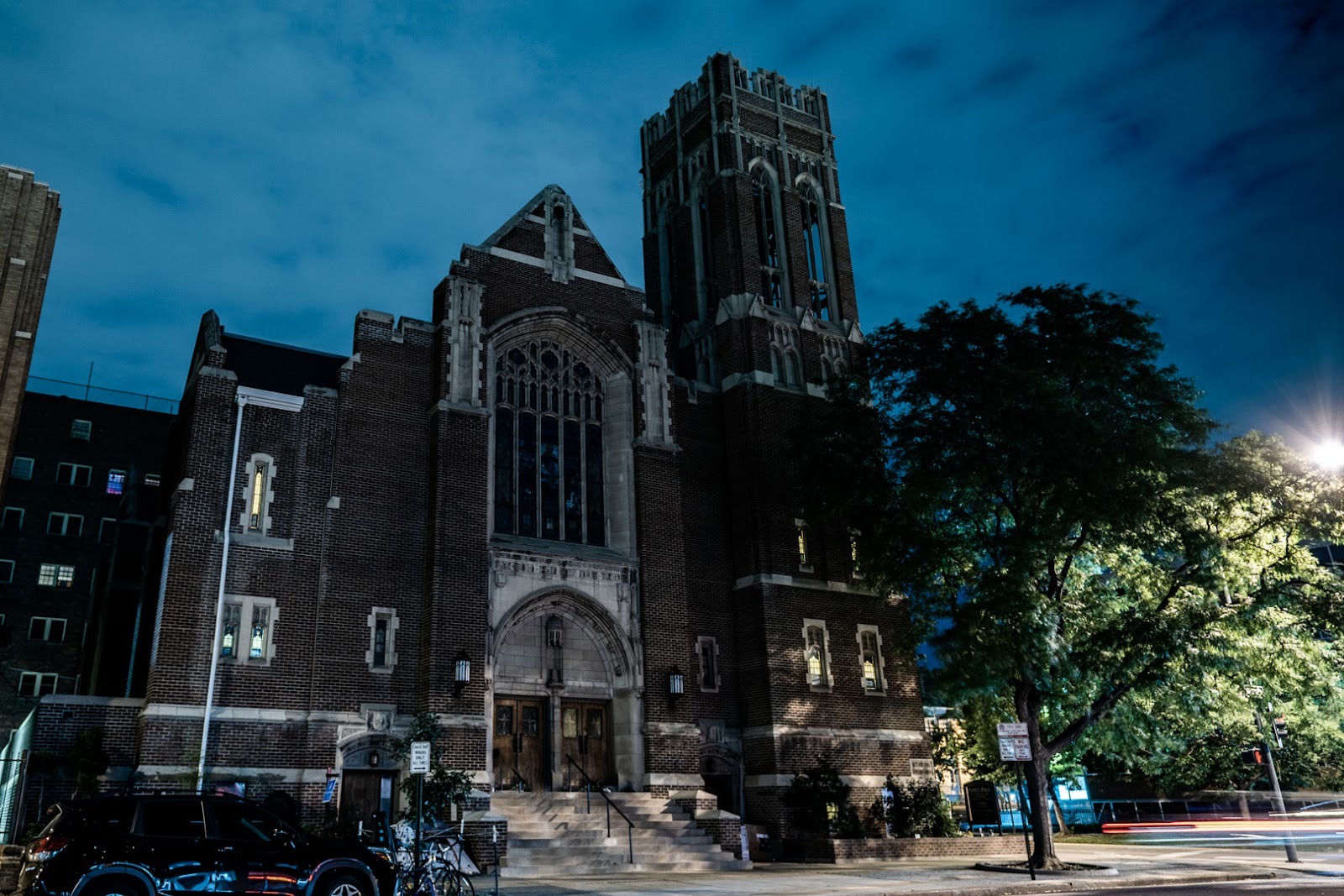
The haunted St Paul’s Lutheran Church in Denver – Copyright US Ghost Adventures
Centuries before the City of Denver was founded, it served as a gathering hub for many cultures, including an array of various Native American tribes. In the summer of 1858, a small group of prospectors crossed the plains of the Colorado Territory from Georgia and made a monumental discovery as they reached the Rocky Mountains.
Just nine years after the California Gold Rush, prospectors found gold at the base of the Colorado Rockies. While there wasn’t much of the precious metal present, the discovery led to people from all over the country traveling to Colorado in hopes of striking gold. Prospectors made camp on the banks of the South Platte River seeking a fortune. It was during this time that, on November 7, 1858, the location was established as Denver City, named after the Kansas Territorial Governor, James W. Denver.
The massive influx of prospectors and their families in search of gold caused Denver’s population to grow at a rapid pace, which led to some residents becoming irritated by the sudden overcrowding. For two brothers, Denver’s sudden boomtown status sent them into a fit of unruly rage.
The Colorado State Capitol
The Colorado State Capitol was built during the 1890s and officially opened its doors in November of 1894. It was home to the Colorado General Assembly and the offices of the Governor, Lieutenant Governor, and Treasurer of Colorado.
The state capitol building is home to several odd ghosts and strange occurrences. The most well-known ghost story from the building is a tale that started back in 1863, not long after the Gold Rush had begun. At that time, Denver was home to temporary residents who made camp near the Rockies in hopes of striking it rich. This led to several mining towns showing up in the area, and these new developments began upsetting other residents, including two brothers named Felipe and Vivian Espinosa. The Espinosa brothers were intent on murdering as many new residents as they could and were believed to have killed as many as thirty people in a matter of months.
The Town’s Revenge Against the Espinosa Brothers
Eventually, the brothers’ murder spree came to an end when they were killed by a group of angry citizens from Park County. Their severed heads were brought to the Capitol building by those who wanted to collect the bounty set by the governor. But to their dismay, the governor refused to pay, and no one knew what to do with the heads.
Initially, they were stored in the Treasurer’s office but were later moved to the sub-basement underneath the Capitol and were later destroyed in the furnace.
Since then, there have been reports from people who claim they have seen the heads floating throughout the building at night. There have also been reports of phantom sounds of horses galloping up and down the main stairway, which is believed to be the brothers searching for their missing heads on horseback.
Tragedy Strikes Denver’s Businesses
Gold wasn’t the only thing luring people to Denver. Those who arrived early enough to the boomtown were able to stake out a claim of land and then sell plots of land to travelers arriving after them.
Just as Denver’s population was thriving, destruction hit the area in 1863 when a fire swept through the business district, destroying several buildings. A year later, tragedy struck again when a flash flood hit Cherry Creek, causing millions of dollars in damage while taking the lives of at least twenty people.
Indian wars soon broke out, cutting Denver’s supply lines, which caused hardships for many local families. Following these troubling times, Denver residents were determined to survive and thrive once again.
The history of tragedy striking businesses in Denver may have started during the back-to-back fire and flooding, but it didn’t end there. Historic businesses and the buildings they are located in within Denver have suffered tragic fates, which have led to several haunting tales in the area over the years.
The Brown Palace Hotel
The Brown Palace Hotel & Spa is considered to be one of the most luxurious hotels in the nation, as well as one of the most haunted. This historic location opened on August 12, 1892, and was founded by Henry Cordes Brown.
Brown started his career as a basic carpenter and climbed the ladder to become a top real estate magnate. He visited Denver in 1860 on his way to California and decided to move there permanently after falling in love with the city. He faced some financial hardships during the Panic of 1873 and decided to open the hotel, which was a smart move as it soon became a popular place for travelers to stay while in town.
The Italian Renaissance-style hotel featured a top-quality design with a Colorado red granite exterior and white onyx décor in the lobby. It was the second-ever fireproof building in the United States because it was built entirely without wood, instead using porous terracotta material. Once finished, the elaborate hotel cost a total of $1.6 million to complete, and an additional $400,000 was spent on furnishings for the 400 guest rooms.
Many influential guests stayed at the Brown Hotel over the years, including Thomas Edison, Charles Lindbergh, John Wayne, and the Beatles. However, there were also some guests who stayed at the hotel and decided to become permanent residents, even in the afterlife.
The Ghosts of the Brown Palace Hotel
While there are several haunted spots within the building, the most haunted room is Room 904, which was once home to Denver socialite Louise Crawford Hill. According to the story, Louise suffered from heartbreak during the time she lived at the hotel. And now her ghost haunts the ninth floor as she searches for her long-lost love.
The staff members who provide tours of the hotel share historic details of the building. Years ago, they would often share Louise’s tale of tragedy while taking guests on a tour of the ninth floor. But today, they no longer include her story.
A few years ago, as the ninth floor was being renovated, the phone lines were uninstalled from Room 904. But oddly enough, calls were still coming through from that room to the hotel’s lobby. Whenever someone tried to answer the call, they would only hear static on the line.
One of the tour guides suggested removing Louise’s story from their tour, and they decided to give it a try. Once they did, the calls to the front desk abruptly stopped. According to the lore, Louise wasn’t very fond of people gossiping about her, apparently even in death.
The Buckhorn Exchange
The Buckhorn Exchange first opened its doors on November 17, 1893, and is the oldest restaurant that is still operating in Denver. It was established by Henry H. Zietz, also known as Shorty Scout, who was one of the most unique individuals in the West. Shorty met the infamous Buffalo Bill when he was ten years old and began riding with him. He became friends with the local Native Americans and got along with practically everyone he met. He opened the restaurant we know today as a saloon that he named the Rio Grande Exchange.
The Rio Grande Exchange saloon catered to many different types of people, from gamblers to cattlemen and even famous individuals such as Theodore Roosevelt, Dwight Eisenhower, and more recently, Ronald Reagan, Bob Hope, and Will Rogers. Today it also serves some unique individuals, including the spirits of some of its former customers.
It’s been said that anyone who died in or around the building now haunts the location. Staff and patrons have spotted apparitions of ghosts dressed as cowboys, miners, or in traditional Native American clothing. They claim to hear phantom footsteps when no one is around or disembodied voices while they’re all alone in the restaurant. Some have even mentioned seeing the tables shift on their own without anyone being nearby.
Denver’s Railroad History
When Denver created their own railroad system in 1869, they went from a struggling small outpost town to a regional transportation hub. As the Union Pacific Railroad bypassed Colorado on its transcontinental route, the people of Denver raised an impressive $300,000 to build their own railroad that intersected with the Union Pacific in Cheyenne, Wyoming. Not long after, the Kansas Pacific Railroad crossed the plains to Denver, and after a huge silver strike hit the town of Leadville, Denver was once again a thriving boomtown, and many of the elite in surrounding states and towns took notice.
Millionaire’s Row
Soon after the railroad system helped the town get back on its feet, Denver was thriving more than ever before and attracting some of the wealthiest people in the country to relocate to Colorado. In 1870, within the Capitol Hill neighborhood, the most prestigious new residents of Denver began to build elaborate mansions along 14tth street, which was later known as Millionaire’s Row.
Wealthy families are often associated with tragic tales of murder and betrayal, and those who lived on Denver’s Millionaire’s Row are no exception. Here are some ghostly tales from some of the most haunted mansions found within Denver’s historic neighborhood.
Peabody Whitehead Mansion
The Peabody Whitehead Mansion is a beautiful two-story Victorian home that was constructed in 1889 by architect Frank Edbrooke. The home was built for James Hamilton Peabody, who was the governor of Colorado at the time. It has long been a popular historic landmark in Denver known for its beauty, but during the 1970s the mansion made headlines after a horrific crime took place there. Two construction workers who were doing repairs on the mansions abducted a young girl and murdered her inside the empty mansion. According to local lore, her body was buried underneath the foundation.
There is also the tale of a woman who waited at the mansion for hours for her fiancé to arrive only to die while waiting there. There have also been haunting tales of people feeling drawn to the building as a peaceful place to end their lives.
The Ghosts Haunting the Peabody Whitehead Mansion
It is believed that because of these and other macabre events, the Peabody Whitehead Mansion is now haunted. But perhaps one of the main reasons why this historic home is so riddled with ghosts is due to the past actions of a former resident, Dr. William Whitehead.
Dr. Whitehead was a wartime surgeon from New York who had seen plenty of atrocious sights while working on the battlefield. Many of the patients Dr. Whitehead treated were from the Crimean war, and a large majority of those men ended up losing their lives while under his care.
It is believed that the spirits of some of his former patients in New York followed him when he relocated to Denver and remain in the mansion today. He would often talk about seeing the apparitions of soldiers wandering in the hallways of his new home at night. Today, visitors still report seeing these ghostly soldiers as well as seeing books flying across the room, watching pictures fall from the walls, and a number of other unexplainable disturbances that occur all throughout the night.
Molly Brown House
The Molly Brown House Museum is a beautiful Victorian-style home that holds great historical significance to the people of Denver. It was built in the 1880s by architect William A. Lang for Isaac and Mary Large. The home was one of the earliest to have modern conveniences such as electricity, heat, a telephone, and indoor plumbing. Unfortunately, the Larges suffered some financial difficulty not long after moving in and had to sell their home, which was then purchased in 1894 by Denver socialites James Joseph Brown and his wife Molly. When James passed away, the ownership of the house transferred to Molly.
Molly Brown, who was born Margaret Tobin, became a notable figure in Denver’s elite circles. Aside from her wealth, one of the things she was most well-known for was the fact that she survived the sinking of the Titanic.
The Unsinkable Molly Brown
Molly took the maiden voyage of the historic ship alone, and when it was certain that things had taken a tragic turn, she took action. She began assisting the crew, helping to load people into the lifeboats before boarding one herself. Once she made it safely off the ship, she insisted to the others onboard her lifeboat that they search the sea for possible survivors. Because of her selfless acts, from that point forward she was known as the “Unsinkable Molly Brown,” and she became one of the most famous survivors of the Titanic.
Today it is believed that Molly’s ghost resides in her former home. Employees of the museum have claimed to notice the light bulbs throughout the house will become unscrewed. They’ve also mentioned the furniture being rearranged and will sometimes see the reflection of a woman dressed in Victorian attire in an antique mirror that many believe is Molly’s ghost. Tourists have also felt cold spots in her bedroom and have caught a glimpse of her shadowy figure passing by them.
Croke-Patterson-Campbell House
The Croke-Patterson-Campbell House was constructed in 1891 and was originally built for Thomas B. Croke, who soon after he moved in, found the house to be unsettling. Not long after moving in, he resold the house to Senator Thomas Macdonald Patterson. When Patterson died, the home was inherited by his daughter and son-in-law, Margaret and Richard Campbell. But there are many who say that Thomas’ spirit never left the home. Today the former mansion is one of Denver’s most elaborate hotels and one of the city’s most haunted establishments.
Years after the house was owned by the Campbells, it was purchased by Dr. Archer Chester Sudan, who renovated it into an apartment complex and residential home by adding six apartments to the building. Dr. Sudan occupied two of the apartments until he moved out in 1957.
After Dr. Sudan left, it’s been said there has been no peace inside the house. Tenants, staff, and visitors have mentioned seeing objects fly around the rooms and being woken up at night by strange loud noises coming from the empty units. Some young families with small children who have lived there have mentioned their children becoming uncontrollable and seemingly possessed. There was even one report of an infant mysteriously found dead inside one of the apartments. After the child died, the mother took her own life, and some claim to hear her ghost crying out for her baby at night.
Conclusion
The City of Denver has a history that is plagued by many haunting spirits, ghosts, and dark entities who reside inside some of the most historic locations in town. If you are interested in learning more about these and other spooky places throughout the Queen City of the Plains, you should consider booking a fun and frightening ghost tour with the crew at Denver Terrors from US Ghost Adventures.